

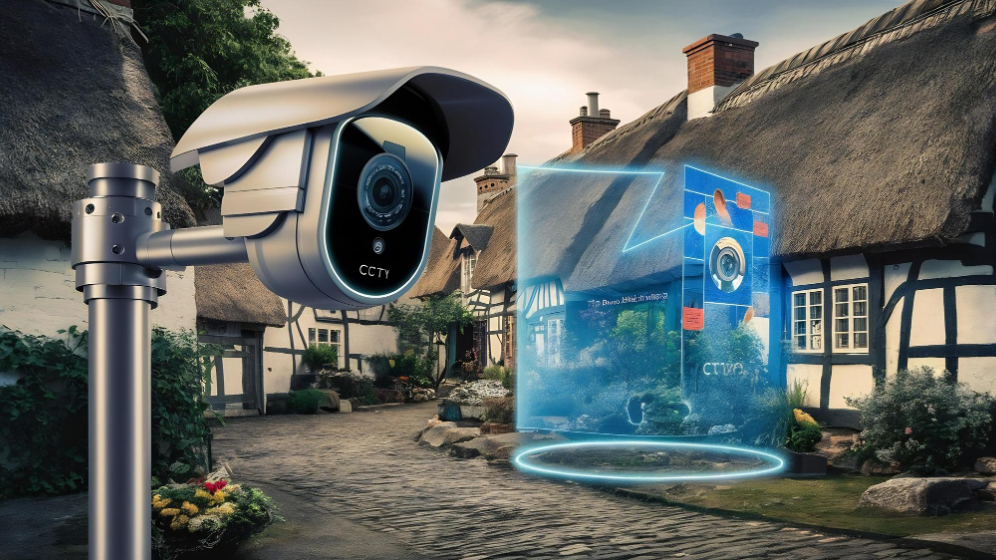
The Future of Smart Surveillance Is Being Shaped by AI-enabled CCTV Systems
Introduction
Intelligent systems are incorporating AI-enabled CCTV so that organizations can analyze surveillance data with more precision and efficiency. The traditional function of the camera was simply to record; therefore, the camera functions of the intelligent surveillance network are becoming increasingly focused on analyzing activity within expected patterns, detecting unusual behavior, and providing information that supports executing these two functions in real-time.
Surveillance technologies are continuing to evolve as businesses deal with more complicated places and spaces to manage; consequently, video surveillance systems are now a necessity for organizations that need more than just a video history of what happened within a location.
From Passive Monitoring to Intelligent Surveillance
When looking into the past, you saw how video recording was purely passive; it just captured video footage but did not offer any immediate feedback. In most situations, you would have to wait until you had determined an incident occurred to analyze the footage. In the present day, however, with the advent of AI-enabled CCTV systems and improved video evidence technology, active real-time monitoring of video feeds and alerts due to anomalous activity detection are now being performed in a more automated way with less reliance on personnel performing manual monitoring.
Additionally, this allows for the automation of identifying behavior patterns, so there will be less reliance on constant human monitoring, and there won’t be any personnel who will have to manually monitor the video feeds.
Key Capabilities That Are Driving Modern Surveillance
The advancement of modern surveillance, through technologies like analytics, automation, and coordinated monitoring, provides organizations with increased visibility into their entire infrastructure. Through use of vehicle tracking technology, organizations can monitor vehicle movement, identify abnormal vehicle movements, and track vehicle movement as they pass through various areas on a site or facility that is designated as a campus, distribution center, or controlled area.
The effectiveness of these surveillance systems is made possible through several capabilities:
- Automated event detection by advanced video analytics
- Continuous real-time monitoring of multiple locations
- Behavioral recognition to identify abnormalities
- Integrated alert systems for rapid response time
- Centralized management dashboards for security teams
Strengthening Visibility Infrastructures
Modern security systems have a wide range of support capabilities across many different operational objectives. Surveillance systems provide coverage and tracking (monitoring) of the movement of people and things within facilities, providing information to the facilities administrators on safety risks for their various operations under one umbrella.
Surveillance networks use advanced analytical capabilities to provide AI-enabled CCTV solutions that continuously monitor activity and detect patterns automatically. This means that organizations will use these technologies to rapidly identify unusual behavior while maintaining visibility throughout their entire area of concern.
When video feeds are combined with analytical capabilities, it becomes easier for the organization to reduce response times and improve the level of coordination between the organization's security and operations management.
Use of Surveillance Data for Operational Intelligence Beyond Security
Operational intelligence from the use of surveillance data to generate intelligence is evolving to do more than just support traditional security functions. Organizations can make better infrastructure-related decisions when they have the ability to monitor movement patterns, space utilization, and personnel flows.
When a surveillance system is linked to an access control system through video analytics, administrators have one set of information by which they can continuously monitor how people and resources are moving through restricted or sensitive areas, thereby reinforcing their governance structure, while at the same time providing teams with operational insights to help them more effectively analyze operational patterns.
Today's modern video surveillance systems are not just safety tools but rather can also be extensive sources of operational intelligence.
Creating a Future-Ready Infrastructure for Surveillance
Technological advancements and changes in network infrastructure are causing significant changes to how we use surveillance. Organizations want systems that grow as they grow, but right now, most surveillance systems can't do that.
The development of intelligent surveillance systems is happening through the use of AI-enabled CCTV systems that can help organizations improve their ability to respond to events and incidents by integrating other types of technology into their monitoring processes. According to industry experts at Perennial Intellect, a scalable surveillance infrastructure is critical for the long-term resiliency of any infrastructure and its ability to be monitored intelligently.
Additionally, the research and deployment strategies that Perennial Intellect discusses about intelligent surveillance frameworks indicate the significant role they play in providing real-time visibility of operations, improving the coordination between responders, and developing plans for sustainable security across modern facilities.
Conclusion
The current state of what has traditionally been known as surveillance infrastructure is changing quickly using the ability of intelligent analytics and automation tools to change how organizations monitor their facilities remotely, specifically through monitoring systems. Integrating advanced analytics into the surveillance environment of an organization will provide greater insight into safety hazards, operational patterns, and infrastructure performance. Organizations using intelligent monitoring are encouraged to contact us as intelligent surveillance systems become more sophisticated to learn about how their infrastructure can continue to enhance resiliency into the future.


