

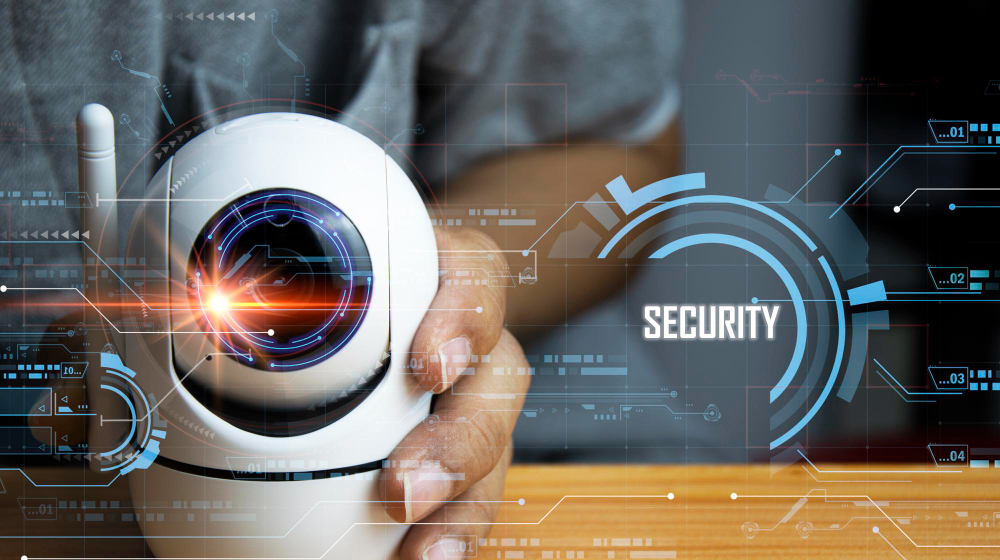
AI in Security and Surveillance: Building Intelligent, Future-Ready Protection Systems
Introduction
AI-enabled security monitoring is reshaping how modern organisations protect people, assets, and critical infrastructure. Traditional surveillance systems were designed primarily for recording and post-incident review. In contrast, AI-driven surveillance systems actively analyse data, detect threats in real time, and support faster, more informed decision-making.
As security challenges become more complex, the integration of AI-enabled CCTV, real-time tracking, and secure video surveillance is no longer a technological upgrade; it is a strategic necessity for organisations operating at scale.
Understanding AI in Security and Surveillance
Intelligent security and surveillance solutions refer to the use of artificial intelligence technologies such as machine learning, computer vision, and behavioural analytics to interpret video and sensor data automatically. Instead of relying on continuous human observation, AI systems evaluate patterns, movements, and anomalies to identify potential threats as they occur.
This approach significantly improves the effectiveness of security surveillance systems by transforming them from passive recording tools into intelligent monitoring platforms. Secure video surveillance powered by AI allows organisations to detect risks earlier, reduce response times, and minimise operational blind spots.
Limitations of Traditional Surveillance Systems
Conventional security surveillance systems depend heavily on manual monitoring and predefined rules. While they can capture footage reliably, they often fail to provide timely insights during critical situations. As the number of cameras and monitored locations increases, human operators struggle to maintain accuracy and consistency.
In addition, conventional systems are primarily reactive. Thus, organisations will frequently only learn of an incident after the damage is already done. Artificial intelligence (AI) for surveillance provides a solution to this challenge in how the surveillance system provides an opportunity for real-time analytics and analytics for predicting incident occurrence, leading to opportunities for an organisation to prevent incidents rather than just report them post factum.
Role of AI-Enabled CCTV in Modern Security
AI-enabled CCTV systems are central to intelligent surveillance infrastructure. These systems analyse live video feeds to identify suspicious behaviour, unauthorised access, or abnormal movement patterns without constant human supervision.
By embedding intelligence directly into video surveillance, organisations can achieve the following:
- Automated detection of potential threats
- Reduced dependence on manual monitoring
This shift enhances accuracy while allowing security teams to focus on decision-making rather than observation.
Real-Time Tracking and Situational Awareness
AI-enabled security surveillance systems rely heavily on real-time tracking technology. Real-time tracking allows for ongoing surveillance of people, vehicles, and property in some of the largest and most complex environments, including universities, industrial facilities, and cities.
Real-time tracking gives security teams a quick understanding of their environment so they can respond rapidly to incidents and coordinate during emergency situations. This capability becomes increasingly important when time is of the essence and delays could lead to serious risk to operational or safety-related activities.
Integrated Surveillance Infrastructure and Secure Networking
Modern security systems no longer operate in isolation. The integrated surveillance framework connects all AI-enabled CCTV, access control systems, sensors, and network communication into one unified system rather than having each component be independent from the others. The integration of all these technologies allows real-time access to all security information and provides an integrated view of the safety and security of the facility and an overall complete security picture.
Secure network communication ensures that video feeds and analytical insights are transmitted safely across locations. This is essential for maintaining data integrity and protecting surveillance systems from cyber threats, especially in large-scale or distributed deployments.
Wireless Surveillance Systems and Deployment Flexibility
Wireless surveillance security cameras add flexibility to modern security architectures. They allow organisations to deploy surveillance capabilities quickly without extensive physical infrastructure, making them suitable for remote locations or temporary sites.
Wireless systems also support scalability, enabling organisations to expand surveillance coverage as operational needs evolve without compromising security or performance.
Applications of AI-Powered Security and Surveillance
AI-powered surveillance systems are widely adopted across industries where safety, reliability, and asset protection are critical.
Some examples include:
- Monitoring safe cities and public safety
- Monitoring critical infrastructure, businesses, energy providers, etc.
By providing proactive threat detection and rapid response, AI-driven surveillance improves security in all these industries.
Benefits of AI-Driven Security Surveillance Systems
The adoption of AI in security and surveillance delivers both operational and strategic advantages. Organisations gain improved threat detection while optimising resource utilisation.
Key benefits include:
- Faster identification and response to security incidents
- Reduced operational costs through automation
These benefits position AI-powered surveillance as a long-term investment rather than a short-term solution.
Future Outlook of Security and Surveillance
In the future, security surveillance will be based on 'intelligent', autonomous systems that can adapt to their environment and changing risks at all times. With advancements in artificial intelligence, drone usage, and the development of autonomous systems, technology will improve how the industry monitors, analyses, and responds with minimal human input.
Security surveillance will eventually become an integrated "intelligent" platform that will support safety and support strategic operations as these technologies mature.
Conclusion
AI-powered security is transforming how organisations protect assets and manage risks.
Contact us to implement AI-driven surveillance that turns passive monitoring into actionable intelligence. Smart CCTV, real-time tracking, and integrated systems help anticipate threats and respond faster.
Organisations can safeguard operations and ensure business continuity with intelligent security solutions.
FAQs
Q1: What is an AI-enabled security surveillance system?
AI-enabled security surveillance uses artificial intelligence (AI) to automatically perform analysis on video and/or sensor data. These systems allow for quicker detection of potential threats and better operational situational awareness.
Q2: How Does AI Impact Traditional Surveillance Systems?
AI takes away the need for performing manual supervision of the surveillance feed, increases the amount of data/information accuracy that is provided to the surveillance systems, and gives traditional systems their predictive capabilities.
Q3:Where Can AI-Powered Security Surveillance Systems Be Found?
AI-powered security surveillance systems can be found in many smart cities, the infrastructure of energy production, many commercial enterprises, as well as critical facilities (including airports).


