

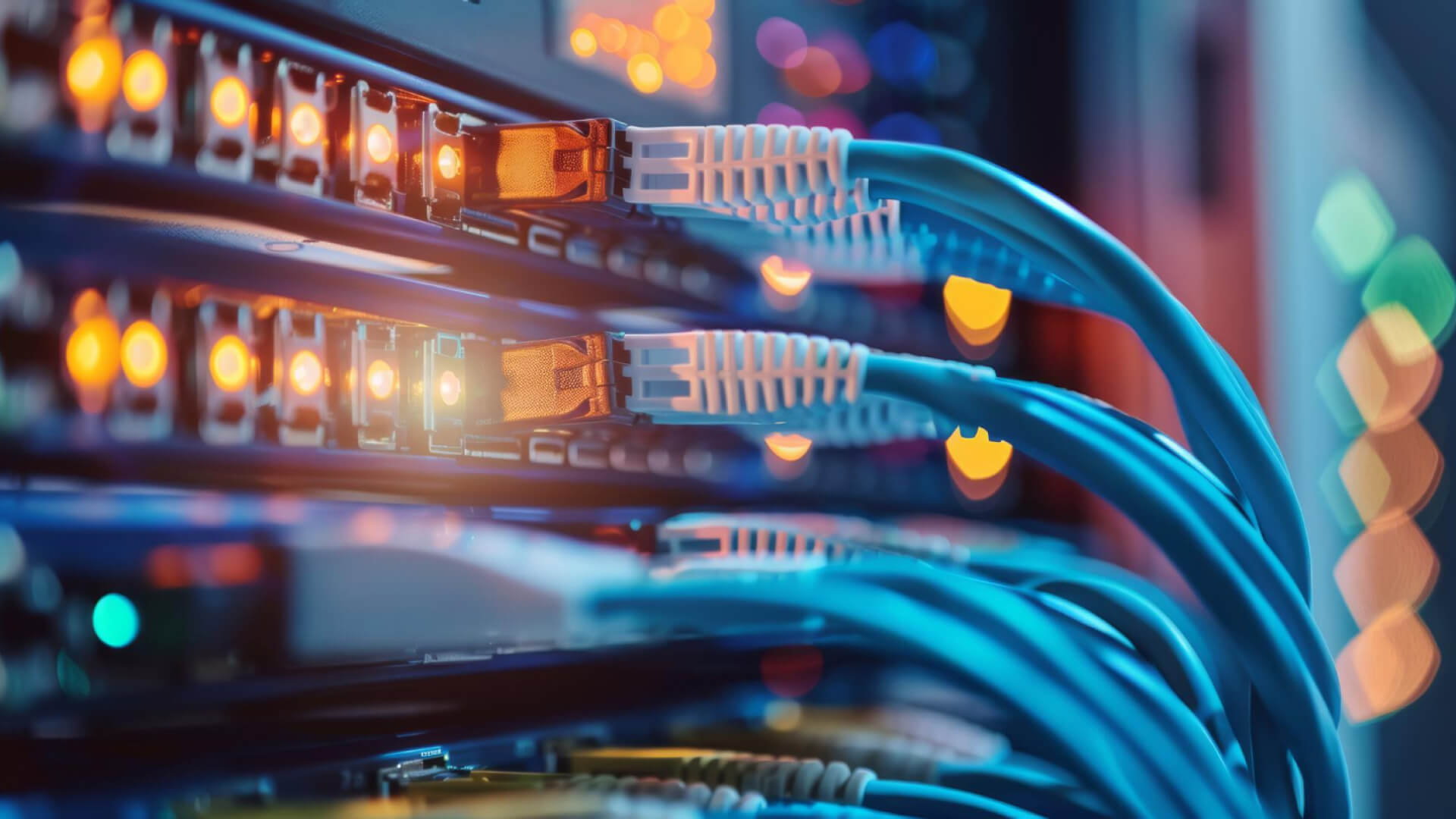
Choosing the right network cable can have a direct impact on how reliably a business communicates and shares data. Fiber optic and Ethernet cables are both widely used in business networks, but they work differently and have different strengths. So, when it comes to fiber optic vs Ethernet cable, which one is actually better?
The answer depends on factors such as network distance, speed requirements, installation environment, and budget.
What Is Fiber Optic Cable?
Fiber optic cables transmit data using pulses of light through thin strands of glass or plastic. They are designed for high-speed data transmission over long distances and are less affected by electromagnetic interference.
This makes fiber a strong choice for large campuses, industrial facilities, data centers, and networks where high bandwidth and long-distance connectivity are important.
What Is Ethernet Cable?
Ethernet cables, such as Cat5e, Cat6, and Cat6a, use copper conductors to transmit data. They are commonly used to connect computers, switches, access points, cameras, and other network devices within offices and buildings.
Ethernet is generally easier to install and can be more cost-effective for shorter connections.
Fiber Optic vs Ethernet Cable: Key Differences
The biggest differences come down to distance, speed, interference, and cost.
Fiber optic cables can support longer transmission distances and very high bandwidth while remaining resistant to electromagnetic interference. Ethernet cables are better suited to shorter distances and are often simpler and less expensive to deploy.
For a small office with standard networking requirements, Ethernet may be more than enough. For a large facility where data needs to travel between buildings or across longer distances, fiber can provide a more suitable backbone.
Which One Should Your Business Choose?
There is no single answer to which cable is better. The right choice depends on what the network needs to support.
Businesses should consider the distance between connected devices, expected data traffic, environmental conditions, future expansion, and installation costs before deciding.
In many cases, the best approach is not choosing one over the other, but using both. Fiber optic cable can serve as the high-speed backbone, while Ethernet can connect individual devices within offices, floors, or equipment areas.
Building a Reliable Network
A reliable network starts with choosing infrastructure that matches the requirements of the business. Understanding the difference between fiber and Ethernet helps organizations make better decisions about performance, scalability, and long-term network needs.
Whether a business needs high-speed backbone connectivity or dependable connections for everyday devices, the right cabling strategy can provide a strong foundation for its network.


