

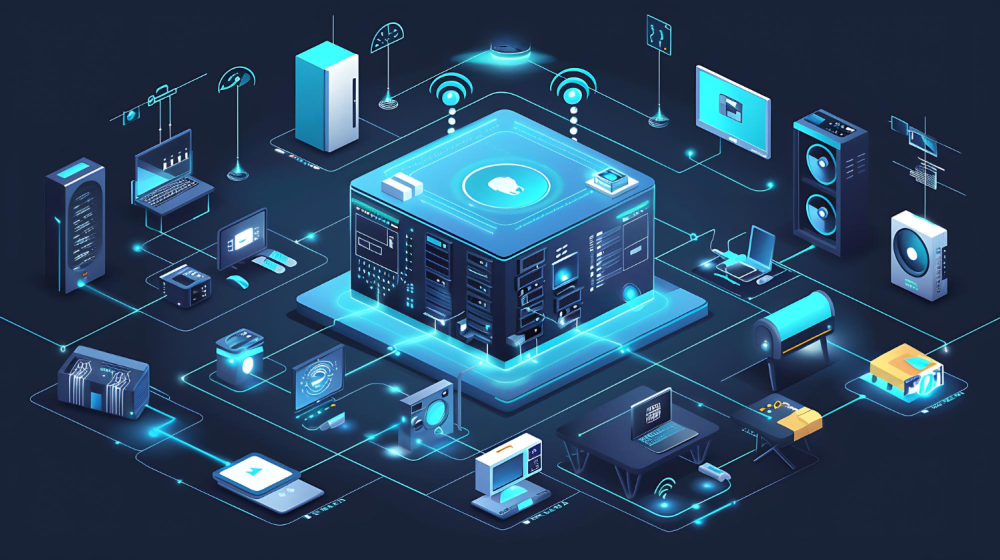
Why IoT Networking is Critical for Smart Industrial Operations and Asset Monitoring
Introduction
Operational visibility in today's industrial environment often relies on the structure of IoT Networking across the various systems and devices that are connected together. As industries continue to digitize their processes and automate, the importance of connectivity has become not only a support function, but also a foundational component required to achieve efficiency, monitor, and control operations.
Today, industrial operations use a variety of devices that are all interconnected with each other (e.g., sensors, machinery, software applications/systems, and analytics). A well-designed network infrastructure provides the ability for all of those devices to communicate with each other; without this, they will not be able to communicate effectively and cause inefficiencies and delays, as well as create risk to all of the operations. Creating an effective Networking framework allows for smooth flow of data, which in turn enables real-time insights and up to date decision-making.
Providing Real-Time Data Insights
A reliable, mature network performs one of the most important tasks, which is to support continual data sharing among a variety of systems.
The industrial sphere has a critical need for real-time data because it is necessary to manage the condition of machinery, track how much product is being produced, and know what is going on in the environment around the facility or job site. When a business has properly deployed an Internet of Things (IoT) networking architecture, it can transmit sensor and device data in real time without delays or interruptions, which helps teams identify problems as they arise versus after they have occurred.
Real-time visibility enables:
- Immediate fault detection and notification
- Improved planning for predictive maintenance
- Greater transparency of operations across various departments
Support for Scalable Industrial Ecosystems
As businesses increase their output, the number of devices connected increases substantially. Therefore, scalability is an important consideration when planning for industrial businesses. Using a clear strategy on how to connect systems supports the ability for future growth, while still being able to deliver solid performance. By taking an industrial business's journey through the strategic implementation of a fully functioning IoT in one resilient ecosystem, it will produce an ecosystem where the various devices, platforms, and applications can work together in unison instead of working independently from one another.
Benefits of scalability include:
- The seamless integration of new devices and technologies into existing infrastructure.
- Reduced complexity on the systems when they expand.
- Delivering the same level of service on all of the company's assets across its operating environments.
Enhancing Asset Use and Tracking
Well-functioning asset use and tracking is essential to industrial productivity. Businesses experience difficulties with effective use of, maintenance of, and life cycle management of assets without tracking and accurate usage data. When backed up by a robust IoT Network, connected sensors provide real-time monitoring of assets, producing useful information regarding performance and usage patterns.
This allows for:
- Better resource allocation
- Lower costs from fewer downtime occurrences due to proactive maintenance
- Extended asset life from better decisions based on data
Increasing Operating Efficiency
Connectivity has a direct effect on the efficiency of industrial processes. When there are disjointed systems, data silos frequently form, problems arise requiring manual intervention, and responses are very slow.
Integrating systems into a centralized network structure allows for better coordination and command control over operations to create smoother workflows and increase productivity.
Some other examples of increasing operational efficiencies include:
- Automatically synchronizing processes
- Speeding up communications between teams and systems
- Reductions of manual mistakes and redundancies.
How To Facilitate Data-Based Decision Making
Data is not useful unless it is able to be accessed and processed accurately and interpreted properly. One of the most critical components of this process is connectivity.
When there is basic connectivity established, multiple data sources are able to be collected and analyzed in real-time across various locations. With this type of connectivity, companies can make informed decisions quickly based on changes that occur to operations.
Advantages of Making Decisions Based on Data:
- Better Planning & Forecasting
- Quicker Response Time to Operational Disruption
- Better Alignment between Operations and Business Objectives
How To Integrate Advanced Technologies
Manufacturing operations are rapidly integrating new and innovative technology solutions such as artificial intelligence (AI), machine learning, and automated systems.
These technologies require reliable and consistent streams of data to operate effectively, which can only be achieved by having a strong and reliable network foundation. The use of innovations such as these will ultimately be diminished if there are no reliable connectivity solutions in place.
Advantages of Integration:
- Increased Automation Capabilities
- Greater Accuracy for Predictive Analytics
- Integration was completed without problems between two or more intelligent systems
Conclusion
The success of today's industrial operations can largely be attributed to the way connectivity is designed or implemented throughout all aspects of the business. From enabling real-time visibility to improving asset usage, using networking as the base layer for modern-day operations allows for smart operations; therefore, groups that are proactive in addressing and making use of structured connectivity will be able to improve their operational efficiency (i.e., reliability) and their long-term success. Therefore, an organization should analyze its existing facilities and/or contact us if you'd like additional information about how to improve on your industrial network capabilities.


