

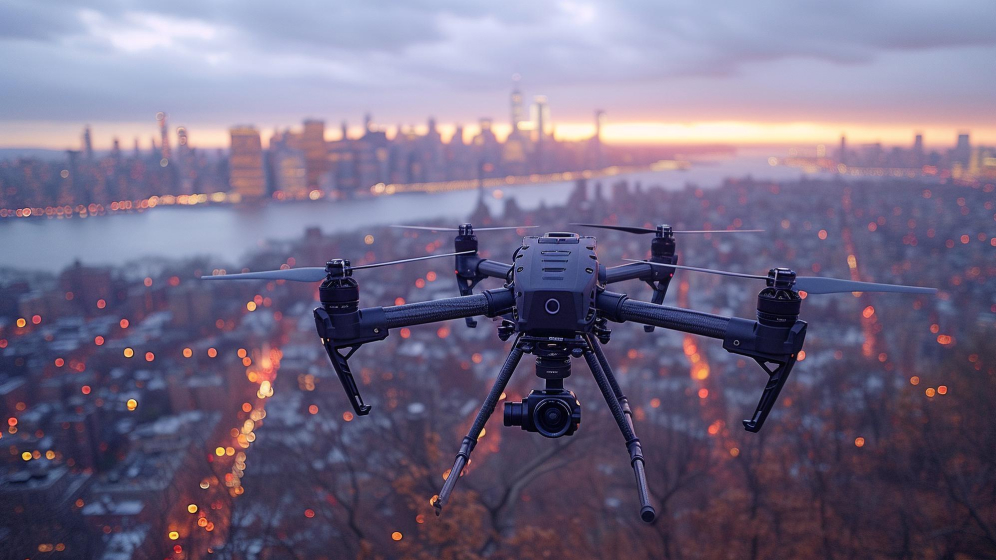
Transforming Industrial Monitoring with Drones & Autonomous Systems Across Critical Facilities
Introduction
With the rise of modern industrial sectors, drones and autonomous systems dramatically changed the way companies can observe their infrastructure and determine how things are operating and how they will be managed in situ across large buildings. These large, complex industries can create buildings with large amounts of safety machines and operate in a manner that requires constant evaluation of the system to ensure compliance with safety, regulatory, and efficiency requirements for the business.
Historically, manual monitoring processes depended on human oversight and continuously conducted site inspections. With the growth of these facilities and the increase in complexity of infrastructure networks, many businesses began using technology to monitor their infrastructure in real time and reduce the need for human oversight. In this way, the use of aerial autonomous systems and intelligent robotic solutions is becoming a critical part of the framework for monitoring industrial infrastructure today.
Industrial Monitoring Scope Expansion
The industrial monitoring landscape is changing as facilities move away from traditional inspections. Today, industrial facilities require a monitoring system that spans across multiple operation zones.
The use of drones and autonomous systems allows companies to gather visual images (visual data), thermal (temperature) data, and environmental-level data from unmatched locations that would be unsafe or challenging to access for most personnel. The monitoring systems enable monitoring personnel to identify structural defects, identify equipment anomalies, and/or discover safety hazards earlier than conventional inspection methods permit.
Aerial platforms are autonomous; therefore, organizations can monitor large-scale infrastructure from above. The types of infrastructure would include:
- Oil and Gas Pipelines
- Power Generation Assets
- Warehousing and Distribution Assets
- Manufacturing Production Facilities
- Power Transmission Towers and Energy Infrastructure Assets
By expanding the monitoring capabilities of the organization across multiple facilities, the organization can achieve an improved level of operational transparency and reduce the occurrence of undetectable infrastructure issues within the organization.
Enhancing Operational Insight via Autonomous Technologies
Operational insight is a critical requirement for an organization to maintain efficient work practices in all types of industrial facilities. To fulfill this requirement, the monitoring systems used at an industrial facility must provide continuous insights into the operating performance of equipment, the environmental conditions of the facility/zone, and the operational workflows that are involved in producing products.
Organizations are utilizing live energy monitoring more frequently by integrating these types of technologies into their aerial inspection workflows, enabling them to capture both visual and performance-related data on their energy systems when completing operational assessments. As a result, the infrastructure teams view the performance of the energy systems from various operational zones and will also be able to identify areas where there may be inefficiency.
The combination of aerial monitoring and energy analytics will aid in creating more informed decisions regarding facility performance due to the increased level of detail available with the use of these technologies.
Major Benefits of Using Autonomous Monitoring Technologies
Organizations that implement remote monitoring technologies experience a variety of operational enhancements that provide greater safety and efficiency.
These advantages are usually as follows:
- Faster cycle of inspections over large industrial sites.
- A reduced exposure of workers to dangerous areas.
- Improved collection of infrastructure data via aerial viewpoint.
- Early detection of structural issues and operational irregularities.
- More consistent documentation of inspections performed.
When drones and autonomous systems are used within an organization’s overall infrastructure management strategy, they have the ability to change how organizations manage their maintenance processes from reactive to predictive, resulting in improved long-term operational reliability.
Enhanced Safety and Operational Viability
Safety is an important element in all aspects of industrial infrastructures. All facilities must have continuous monitoring of not only the condition of all equipment (e.g., performance) but also the environmental risks and, consequently, the operational processes on-site, thus providing for safe working conditions on a continual basis.
The use of autonomous inspection technologies significantly supports this effort by allowing the monitoring of activities to occur without the necessity of personnel entering areas that pose a high degree of safety risk. By utilizing Drones & Autonomous Systems (UAS) to provide inspection services by monitoring elevated structures, hazardous locations, and/or remote locations, organizations are able to collect needed data with little to no interruption or disturbance to the organization’s operational operations.
The infrastructure assessments that Perennial Intellect has completed in the past have repeatedly indicated that automated monitoring technologies enhance an organization’s operational viability through providing a capacity for ongoing observations without increasing the workforce’s exposure to risk.
Autonomous Systems Integrated With Facility Infrastructure
The most effective way for autonomous monitoring technologies to be deployed is through integration into an overall infrastructure ecosystem, instead of operating as separate standalone devices. An integration between autonomous monitoring technologies and a facility monitoring platform makes it easy for organizations to combine inspection data and operational analytics into a centralized management system.
The increased reliance on the use of wireless solutions to support industrial monitoring frameworks has allowed for seamless connectivity between autonomous monitoring devices, monitoring platforms, and operational dashboards. This connectivity allows for inspection data collected from aerial or robotic autonomous systems to be sent immediately to the operational team so that it can be analyzed.
This type of integration supports quicker response times, thereby enhancing the ability for the infrastructure teams to coordinate monitoring across multiple locations.
Supporting Scalable Monitoring Strategies
Organizations are growing and expanding to multiple facility and infrastructure locations and are adding more facilities as they expand. This means that monitoring strategies need to be flexible enough to adjust for the additional assets stored at the site, additional inspection needs, and finally, technology improvements.
Autonomous monitoring systems allow facilities to increase the amount of monitoring they can do without increasing the number of staff who will need to monitor. When you pair up Aerial Inspection with centralized monitoring systems, you can maintain a more efficient way to manage multiple infrastructure ecosystems.
Research at Perennial Intellect supports this idea and states that in regard to ongoing strategies for how to maintain infrastructure performance as your facility continues to grow in complexity, scalable monitoring technologies are critical.
Conclusion
The rapidly advancing technologies for industrial monitoring strategies can now deliver timely and accurate information about physical structures and corresponding conditions. Combined with innovative aerial monitoring platforms, integrated monitoring systems, and connected infrastructure systems, facilities are able to achieve greater operational visibility throughout diverse and complex environments. As industrial ecosystems grow, the ability to coordinate inspections, assess operational data, and mitigate possible risk will play a vital role in ensuring long-term reliability of infrastructure; therefore, entities looking for greater understanding of current monitoring technologies should explore more through Perennial's research and infrastructure knowledge base.


