

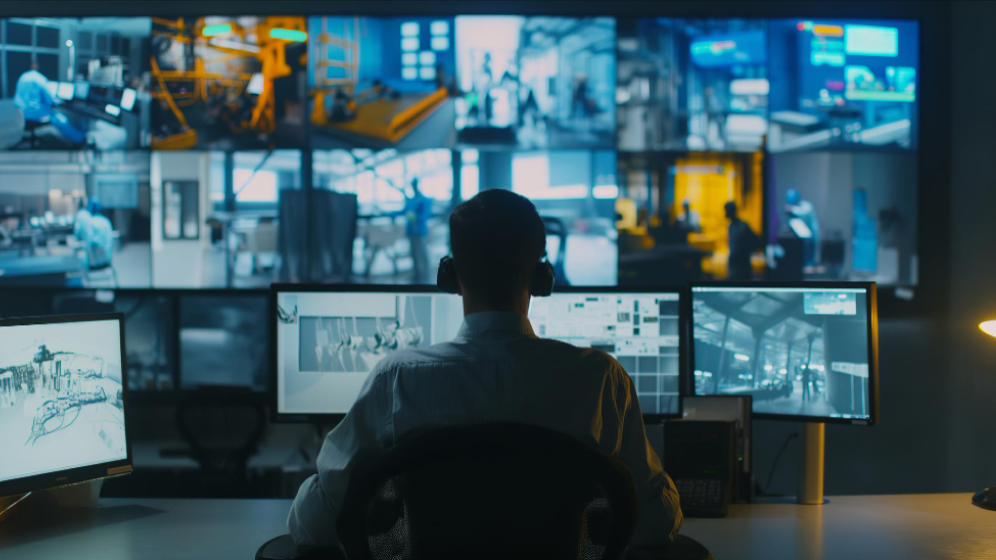
The Strategic Role of Secure Video Surveillance in Smart Facilities
Introduction
To ensure safety, keep operations running smoothly and maintain governance in smart infrastructure, the use of secure video surveillance systems is becoming increasingly important. As facilities utilise increasing numbers of IoT devices, automated entry/exit systems, and centralised management platforms, there is also a growing need for a solid monitoring framework within those same facilities. Smart facilities not only take advantage of digital automation, but they also rely on having structured visibility to all physical aspects of their facility.
Contemporary environments such as modern campuses, commercial buildings, healthcare facilities, and industrial parks are generating significant pedestrian foot traffic and have unique, intricate workflows that need to be taken into consideration when utilising CCTV surveillance systems for the purpose of maintaining an awareness of the situation.
Building Visibility Across Connected Environments
Smart buildings use interconnected systems that can communicate with each other and share information between different platforms. Therefore, surveillance systems must work in conjunction with other digital systems instead of functioning solely as a source of video cameras only.
To be effective, monitoring systems need to accomplish several things:
- Monitor critical entry points on a continual basis.
- Use a centralised system for recording and storing all video files.
- Integrate with other security systems (such as access control).
- Create an automatic alert to notify the appropriate personnel.
At Perennial Intellect, infrastructure evaluations consistently demonstrate that integrated surveillance planning strengthens both operational continuity and compliance alignment across smart facilities.
Predictive Oversight vs Reactive Surveillance
Traditional methods of monitoring security systems have typically involved reviewing video footage after the fact. However, with advances in today's environment, a greater emphasis is placed on gathering proactive information.
With the use of advanced technologies, secure video surveillance systems utilise both real-time video and analytic engines to identify patterns of unusual behavior among the various types of activities and automatically generate an alert when an event occurs. By utilizing this type of integration, companies can respond much more quickly to incidents and rely less on personnel to monitor activities.
Organizations can utilize comprehensive surveillance from one central dashboard in order to better coordinate their actions with other departments and eliminate delays in response times when responding to incidents.
Reduction of Unlawful Entry and Risk of Property Loss
Security for any facility begins at the property boundary. Unauthorized entry into restricted areas of a facility's grounds must be monitored according to strict criteria.
An integrated system that has both perimeter detection and all perimeter monitoring capabilities can monitor for abnormal movements prior to the development into an incident. Improved detection accuracy and reduced false alarms can be achieved by implementing intelligence filtering.
This approach to layered security monitoring enhances the overall capability of a facility to withstand an abnormal incident while allowing employees to continue their work without interruptions from the high level of foot traffic in the facility.
According to Perennial Intellect, a comprehensive security monitoring strategy must have an overall infrastructure plan that outlines the structure of the entire facility's security program before including individual projects that may be outside of a unified plan.
Integrating Surveillance and Facilities Management Systems
There is a need for aligned data flows between operational platforms to produce a truly smart environment. Surveillance solutions will require an integrated approach where the surveillance system is seamlessly integrated into the facility's maintenance, access management, and safety workflow systems.
When secure video surveillance is incorporated into the centralized control systems, administrators will have a holistic view into all departments. Some benefits of integrating SVS into centralized control systems are:
- Coordinated incident tracking
- Comprehensive reporting frameworks for compliance purposes
- Workflow alignment in real-time
- Improved communication between departments
The implementation of integration allows for the evolution of monitoring from a passive activity to an operational intelligence solution.
Structured Response and Command Coordination
Monitoring alone does not guarantee safety; response framework requirements are just as critical.
Therefore, surveillance solutions must be aligned with the command control structure utilized by the organization in order to accommodate escalation protocols, coordination of teams, and documentation of actions in one single interface. Having this structured response model in place will reduce delays in communication and enhance accountability.
Unified systems will provide a streamlined method from time of detection to resolution, rather than a fragmented method through multiple systems of communication.
Design Principles for Future Proofing Facility Growth and Scalability
Smart facilities are continuously changing environments that can grow over time. Surveillance devices and systems need to be scalable without having to replace complete infrastructure.
A scalable architecture allows you to:
- Expand to other buildings or areas through new acquisitions or development;
- Include new types of advanced analytic tool integration;
- Argue that your systems are compatible with future emerging hardware;
- Have uniform governance standards and policies
Secure video surveillance can provide a strategic foundation for creating an adaptive environment that also prepares your organization for changes in technology and operational growth.
Conclusion
To successfully detect and monitor smart buildings, you need to have a well-organized structure that connects your digital processes with systems to monitor physical activity, determine levels of governance and compliance, and establish a coordinated response to intelligent facility management issues. A master plan that establishes a strategic framework for your building will help increase visibility, improve security around the perimeter, and create an environment in which scalable technology can more easily be integrated into a complex design for your building. As the development of physical infrastructure continues to take place, it is extremely important to align your operations with your operational strategy so that the infrastructure of your building will remain viable over the long term and that you will be able to manage your intelligent infrastructure properly. Organizations that wish to have a structured approach to creating resilience in their facility and managing their intelligent infrastructure should contact us to begin a discussion on these topics.


